About Dental Safety Solutions

This author has not yet filled in any details.
So far Dental Safety Solutions has created 14 blog entries.

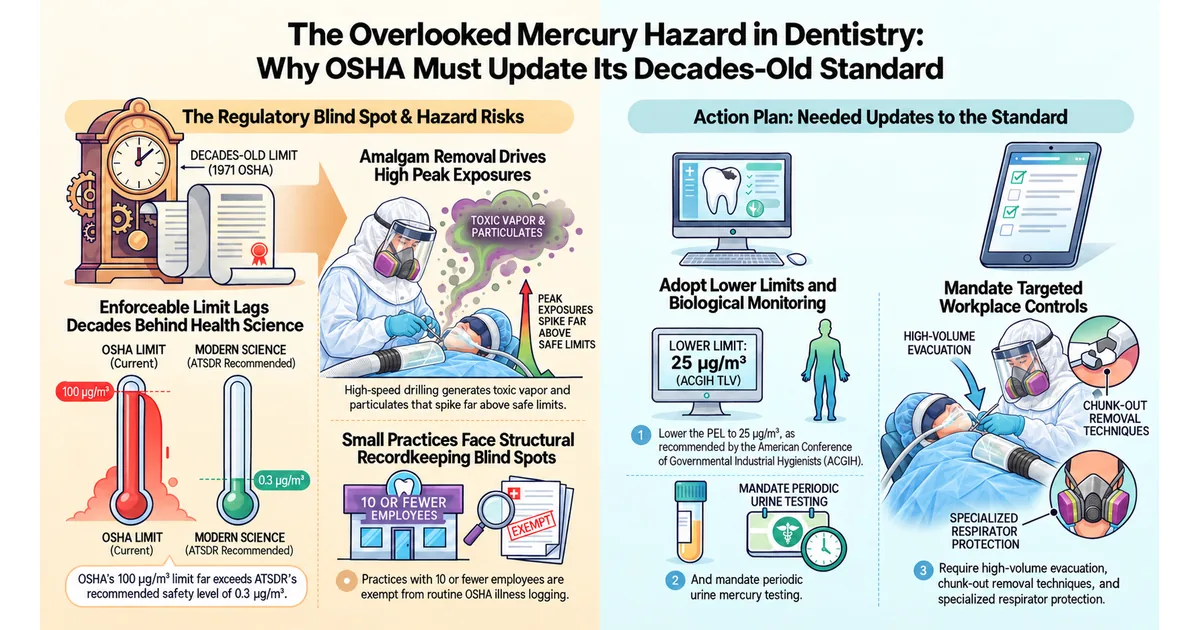
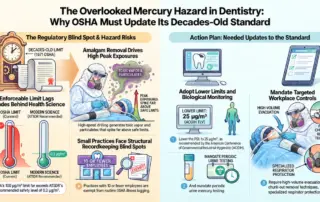
The Overlooked Mercury Hazard in Dentistry: Why OSHA Must Update Its Decades-Old Standard

Dental offices are among the largest U.S. users of elemental mercury, yet OSHA still regulates it under a 1971 air-contaminants framework with no mandatory medical surveillance, leaving dental workers under-protected and largely invisible in injury data.
The Overlooked Mercury Hazard in Dentistry: Why OSHA Must Update Its Decades-Old Standard2026-10-26T04:37:13-05:00

OSHA Worker Rights for Dental Employees Exposed to Mercury

Dental assistants, hygienists and other clinical staff work in an OSHA-covered workplace. This article explains employee rights when exposed to mercury, including hazard communication, training, and a workplace free from recognized hazards.

OSHA Worker Rights for Dental Employees Exposed to Mercury2026-10-26T04:20:40-05:00

Comprehensive OSHA Compliance for Dental Mercury: Dental Safety Solutions vs. RespSafety

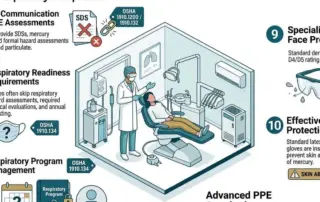
Protecting dental employees from mercury exposure involves several interrelated OSHA standards, not only the Respiratory Protection Standard. This article outlines employer and employee obligations under hazard communication, PPE, hazard assessment, and respiratory protection rules, the potential fines for noncompliance, and how full compliance support from Dental Safety Solutions differs from partial respirator support.

Comprehensive OSHA Compliance for Dental Mercury: Dental Safety Solutions vs. RespSafety2026-10-26T04:38:03-05:00

Respiratory Program Administrator vs. General Respiratory Protection Training: Understanding the Difference

Discover the key differences between general respiratory protection training and a qualified Respiratory Program Administrator. Learn why dental practices need dentistry-specific OSHA compliance training for mercury hazards and full program requirements.

Respiratory Program Administrator vs. General Respiratory Protection Training: Understanding the Difference2026-07-07T03:35:17-05:00

Understanding OSHA 1910.132(d): Performing a workplace hazard assessment

OSHA 1910.132(d) requires all employers to perform a workplace hazard assessment to identify risks that necessitate PPE. For mercury-safe dentists, this means identifying chemical hazards like mercury vapors during amalgam removal

Understanding OSHA 1910.132(d): Performing a workplace hazard assessment2026-09-28T18:09:50-05:00