
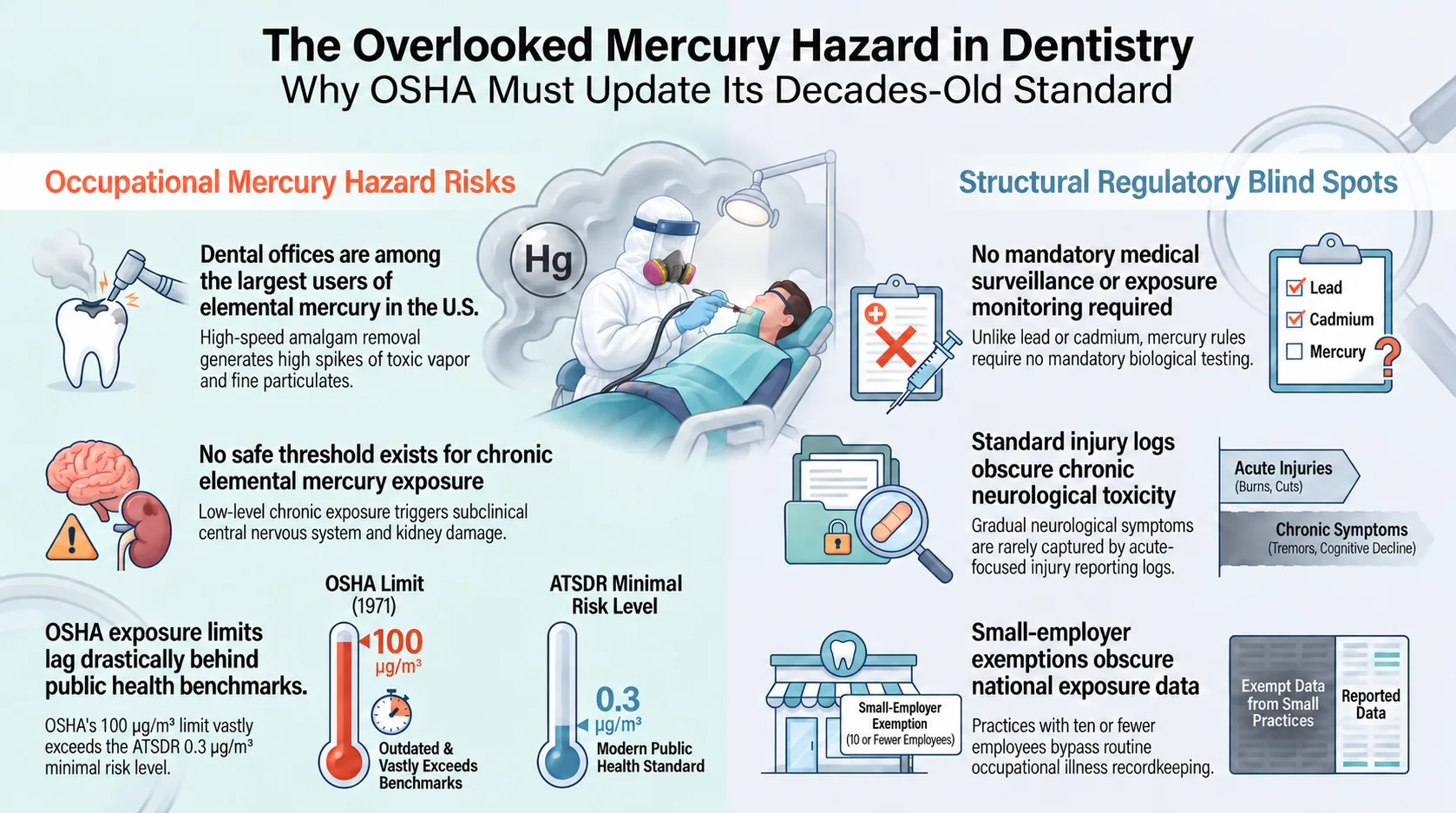
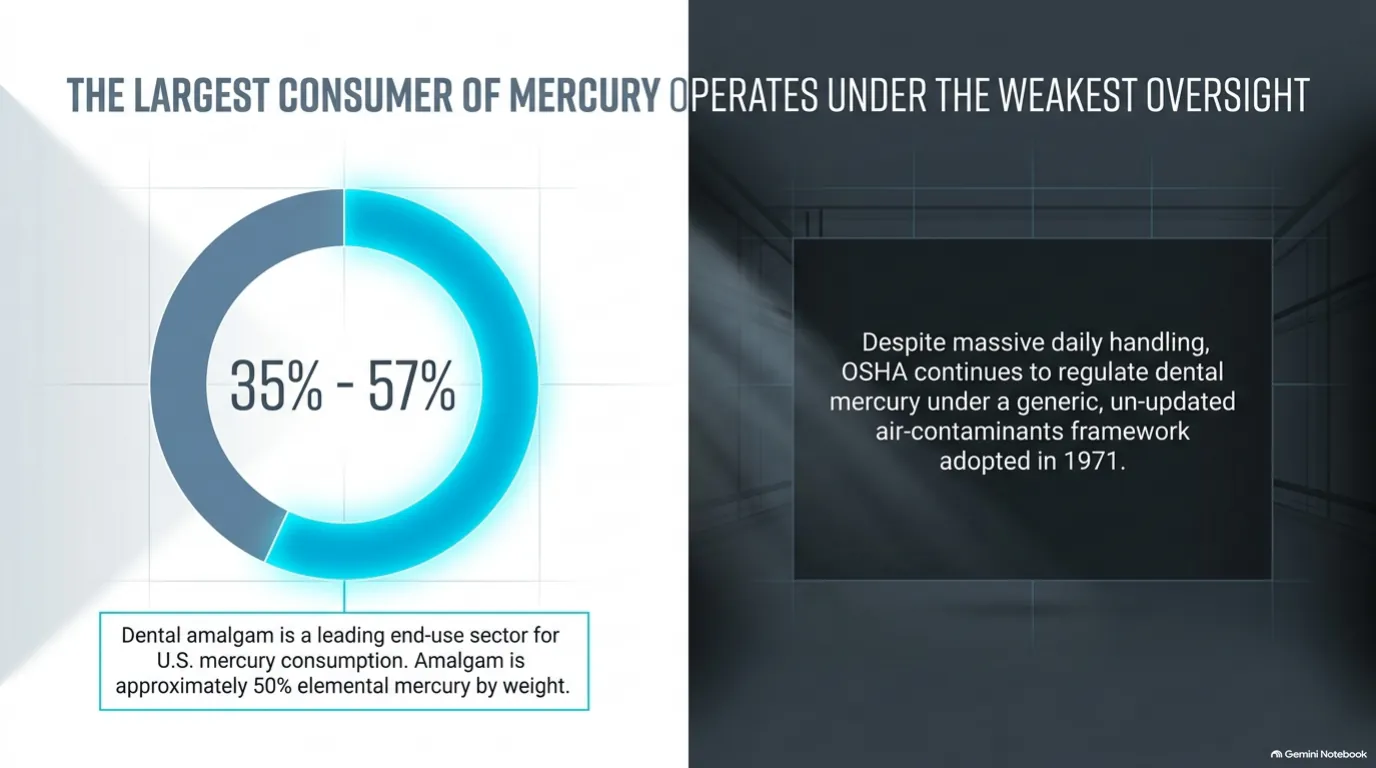
Dental offices remain among the largest and most consistent users of elemental mercury in the United States [1], primarily through the placement and removal of dental amalgam restorations that contain 30–60% elemental mercury by weight [2, 3, 4]. Despite decades of scientific documentation of occupational exposure—particularly during the placement and especially the removal of dental amalgam—OSHA continues to regulate mercury under a general air-contaminants framework adopted in 1971 under section 6(a) of the Occupational Safety and Health Act [5]. That framework has never been updated into a comprehensive substance-specific standard, contains no mandatory medical surveillance or biological monitoring, and is poorly suited to the realities of dental practice. The result is a regulatory blind spot that leaves dental workers under-protected and the occupation largely invisible in OSHA’s injury and illness data [6, 7].
The Regulatory Framework That Never Modernized
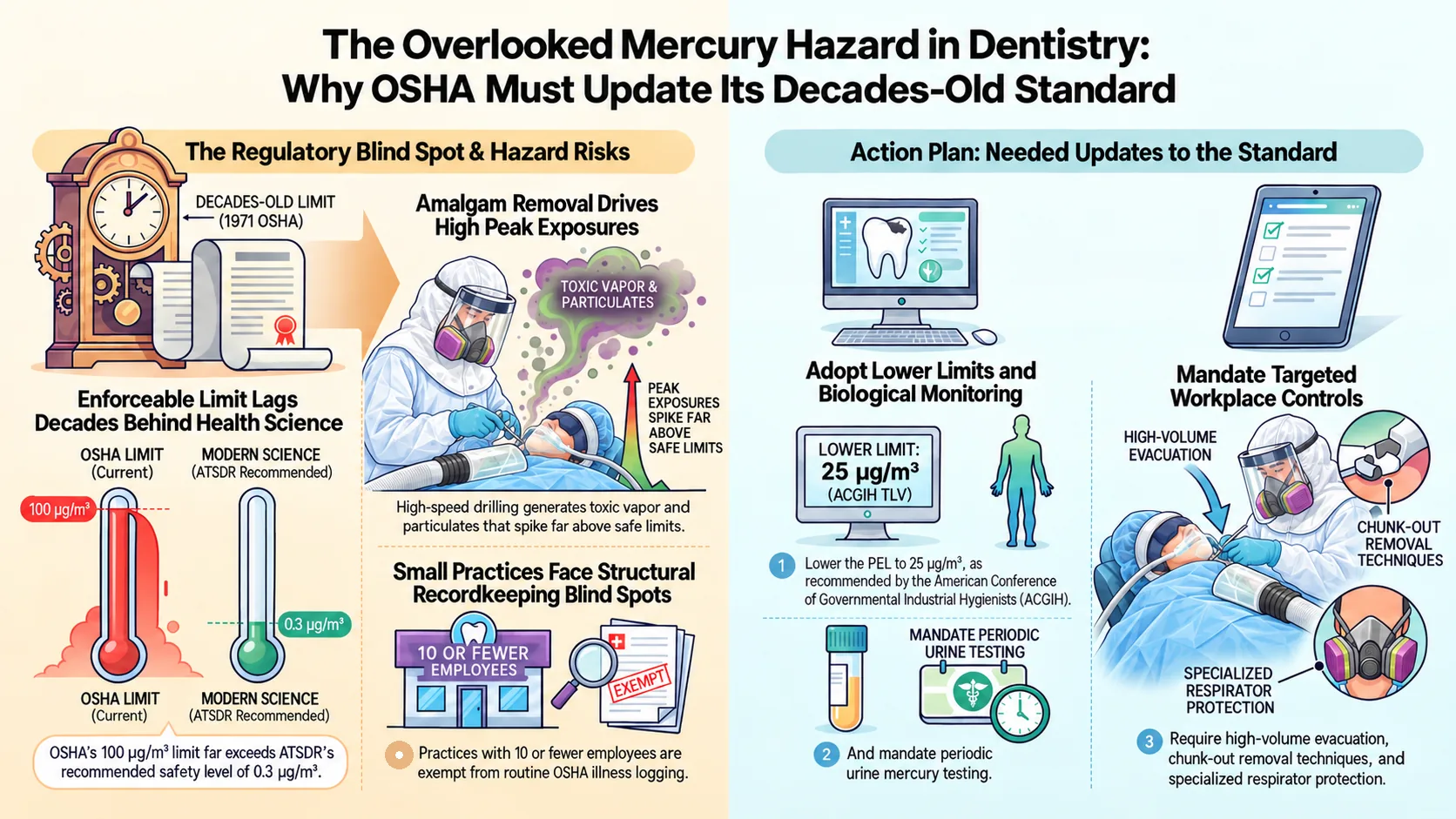
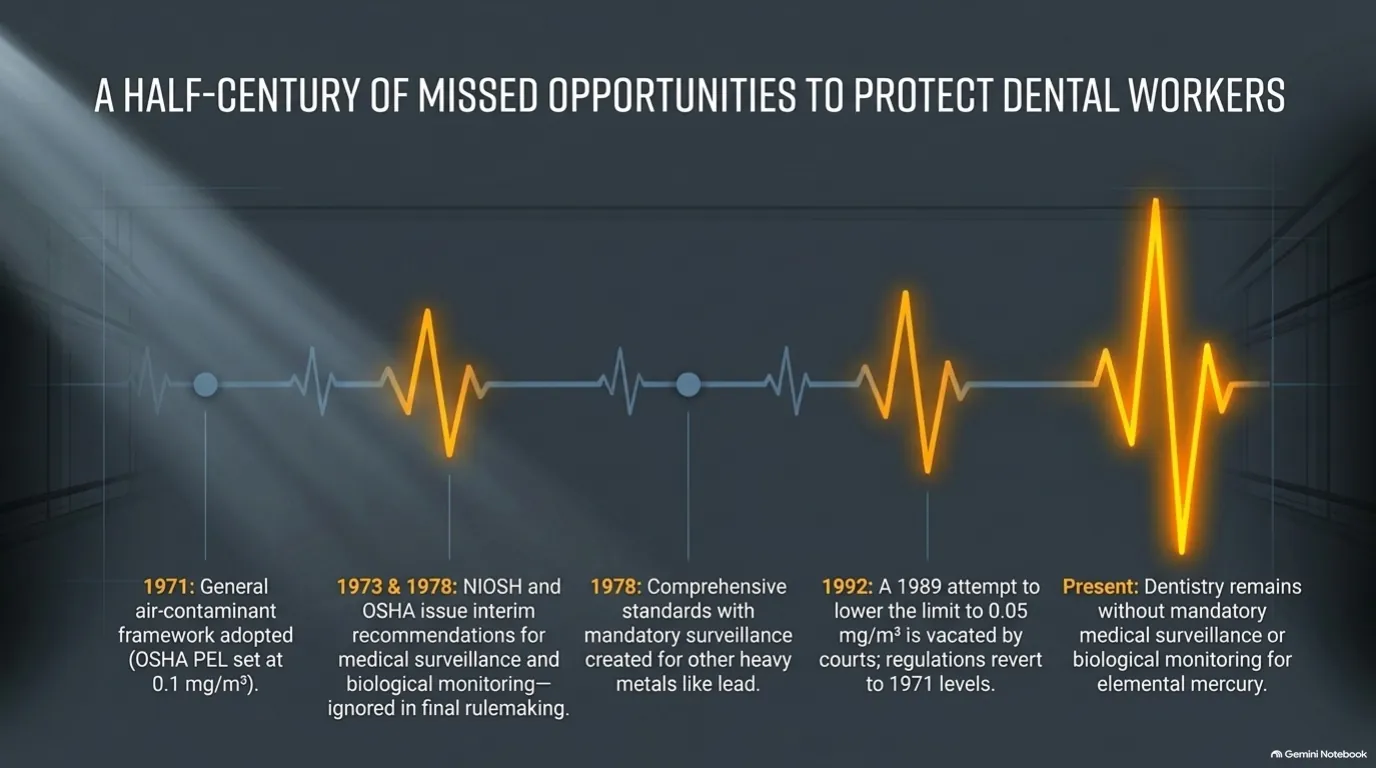
Under 29 CFR 1910.1000 Table Z-2, OSHA’s enforceable permissible exposure limit (PEL) for inorganic mercury is 0.1 mg/m³ as an 8-hour time-weighted average. Although the table still lists the value in the “acceptable ceiling concentration” column (1 mg/10 m³), OSHA has officially interpreted and enforced it as an 8-hour TWA since a 1976 interpretation letter from Assistant Secretary Morton Corn, a position reaffirmed in a 1996 compliance memorandum that called the table listing an error [8, 9].
In 1973, NIOSH issued a Criteria Document recommending a lower limit of 0.05 mg/m³ along with medical examinations, biological monitoring, and work-practice controls for inorganic mercury [10]. In 1978, OSHA issued guidance (CPL 2-2.6) that recommended medical surveillance and urine mercury monitoring for workers exposed above the PEL, explicitly describing these as interim measures “until such time as a complete standard is promulgated” [11]. That complete standard was never issued. Meanwhile, comprehensive standards with mandatory medical surveillance and medical removal protection were promulgated for other metals such as lead in the same year [12].
A 1989 effort to lower the PEL to 0.05 mg/m³ with a skin notation (as part of the broader Air Contaminants Project) was vacated by the Eleventh Circuit in AFL-CIO v. OSHA (1992) because OSHA had not performed the substance-by-substance significant-risk and feasibility analyses required by the OSH Act and prior Supreme Court precedents [13]. The limits reverted to the 1971 values [14]. No subsequent rulemaking has established mandatory medical surveillance, biological monitoring, or an action level for mercury. Industry groups such as the Chlorine Institute developed voluntary biological monitoring programs for chlor-alkali workers; dentistry received no equivalent regulatory attention [15].
No Known Safe Level of Mercury Exposure
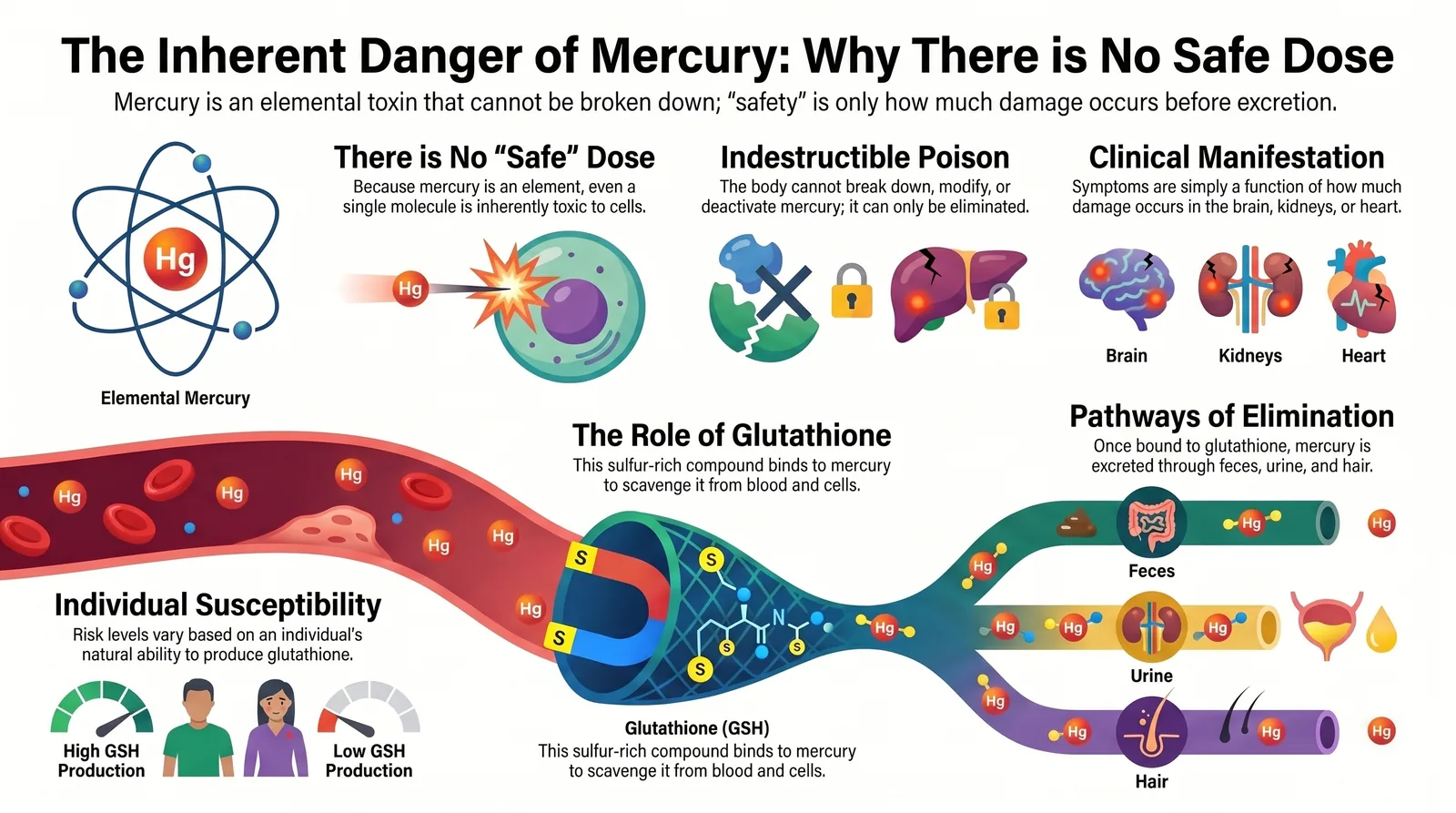
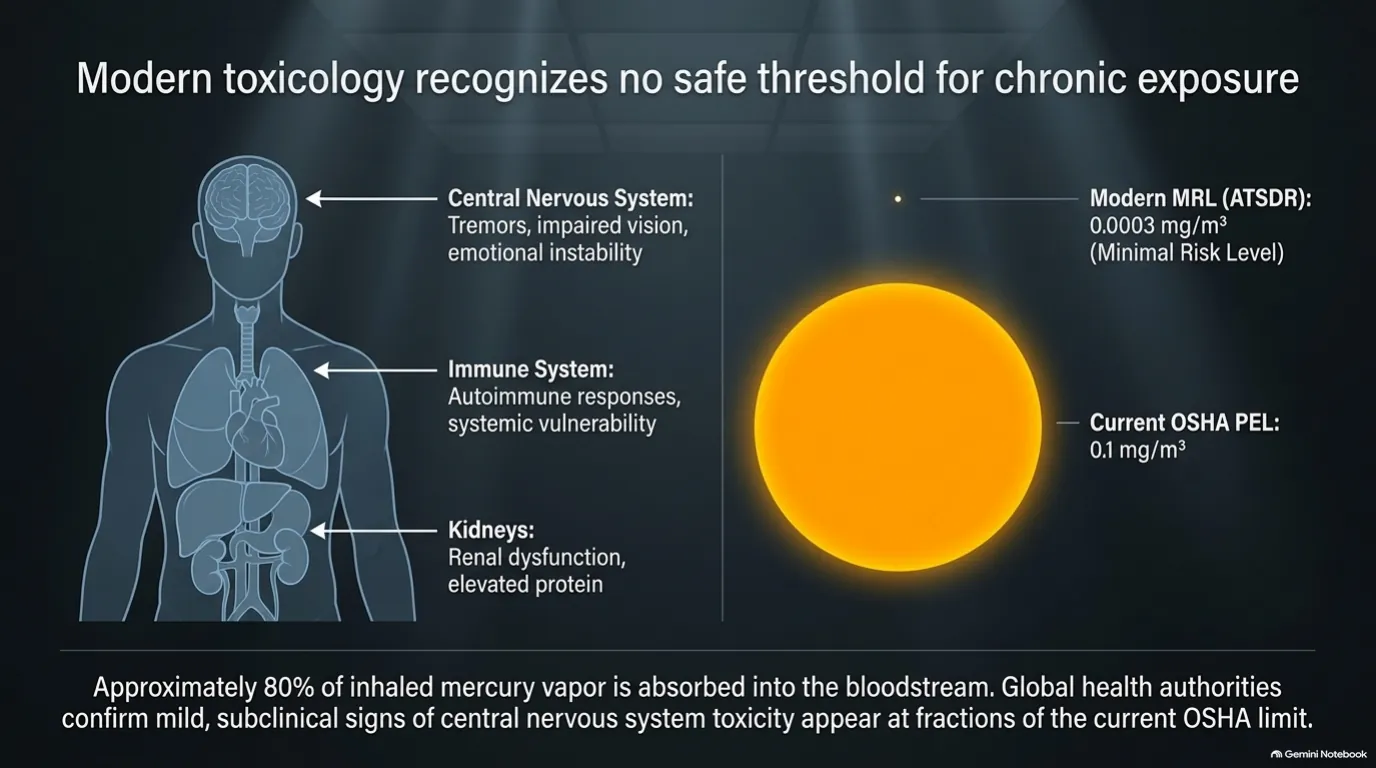
Major public health authorities have long recognized that mercury, including elemental mercury vapor relevant to dental occupational settings, poses risks even at low exposure levels, and no threshold of complete safety has been established for its neurological and other systemic effects. The World Health Organization (WHO) has stated that “exposure to mercury – even small amounts – may cause serious health problems, and is a threat to the development of the child in utero and early in life,” noting that mercury can affect the nervous, digestive, and immune systems as well as the lungs, kidneys, skin, and eyes [16].
In its policy paper Mercury in Health Care (WHO/SDE/WSH/05.08), WHO explicitly states: “Adverse health effects from mercury exposure can be: tremors, impaired vision and hearing, paralysis, insomnia, emotional instability, developmental deficits during fetal development, and attention deficit and developmental delays during childhood. Recent studies suggest that mercury may have no threshold below which some adverse effects do not occur” [17]. Around 80% of inhaled mercury vapor is absorbed into the bloodstream, and WHO notes that mercury is highly toxic especially when metabolized into methylmercury [17].
WHO documents further note that mild, subclinical signs of central nervous system toxicity can appear in workers exposed to elemental mercury levels as low as 20 µg/m³ for several years [16]. The Agency for Toxic Substances and Disease Registry (ATSDR) has derived a chronic-duration inhalation minimal risk level (MRL) for elemental mercury of 0.3 µg/m³ (0.0003 mg/m³), based on tremors observed in occupational studies and incorporating an uncertainty factor of 10 [18]. This MRL is orders of magnitude below OSHA’s current PEL of 0.1 mg/m³ (100 µg/m³). Broader reviews of the toxicological literature conclude that neurological and renal effects have been consistently observed across forms of mercury, that low-level exposures are associated with adverse outcomes, and that minimizing exposure wherever practical remains the appropriate public health approach because a definitive no-effect threshold has not been established [19, 20]. These findings are particularly relevant to dentistry, where both chronic low-level exposure and episodic high peaks during amalgam removal occur.
Dental Exposure: Vapor, Particulate, and Chronic Body Burden
Dentists and dental staff handle elemental mercury in amalgam daily. Multiple studies have documented elevated urinary and blood mercury levels in dental professionals relative to the general population, correlating with years in practice, number of amalgams placed or removed, and working hours [21, 22, 23]. Studies have documented extensive occupational exposure pathways via inhalation of mercury vapor and particulate, as well as dermal absorption, during routine procedures including placement, polishing, and especially removal [24, 25, 26, 27, 28].
Dentists have long been taught that mercury becomes inert once it is mixed into amalgam [29]. Measurements show otherwise. Simply opening a sealed jar of new amalgam capsules has registered almost 500 µg/m³ of mercury vapor, and freshly triturated amalgam has reached 511 µg/m³, more than five times OSHA’s current limit, as the violent shaking heats the liquid mercury inside the capsule [29]. Studies have documented mercury escaping from capsules when packages are opened and during trituration [30, 31], contaminating the amalgamators themselves [32], and continuing to off-gas from freshly mixed amalgam as it sets, for up to five hours [33, 34]. That same off-gassing amalgam is then packed directly into the patient’s mouth.
Release does not stop once the filling sets. In a study conducted with the IAOMT at the University of Kentucky, mercury released by new amalgams during their initial setting period exceeded the range of the test equipment, and even after three months of aging, amalgams released 4.5 to 21 µg of mercury per cm² per day, with brushing increasing release 5- to 10-fold [35, 36].
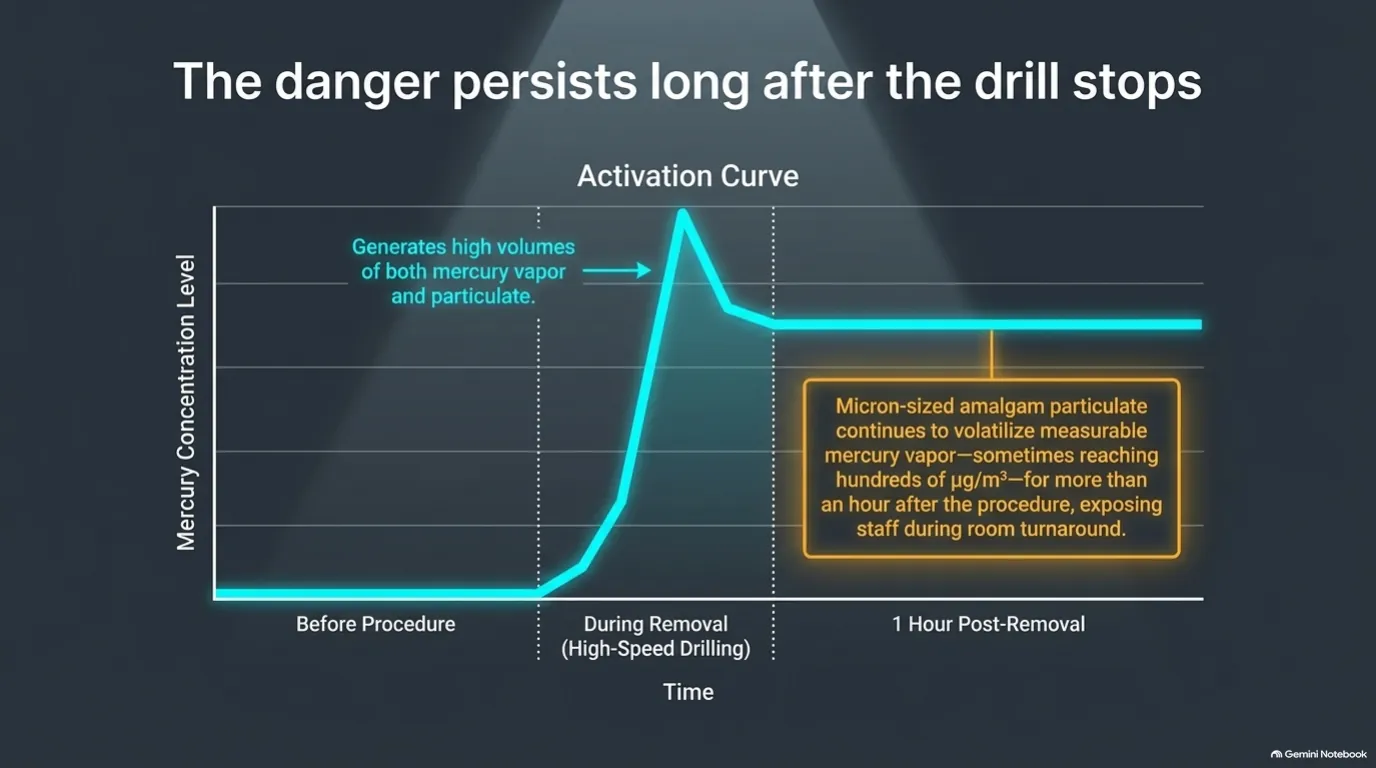
The highest exposures occur during removal of existing amalgam restorations. High-speed drilling generates both mercury vapor and fine mercury-containing particulate. Studies show that vapor levels can spike well above 0.1 mg/m³ when high-volume evacuation and water spray are inadequate or absent [37]. Even with engineering controls in place, research has demonstrated that micron-sized amalgam particulate continues to volatilize measurable mercury vapor for more than an hour after the procedure—sometimes exceeding occupational thresholds for extended periods. Peak concentrations in controlled studies have reached hundreds of µg/m³ [38]. Additional reviews of occupational chemical exposures in dentistry have identified mercury as the most frequently studied agent, with aerosol-generating tasks capable of exceeding recommended limits [39]. Particulate inhalation during amalgam removal has been recognized as an overlooked occupational risk [40].
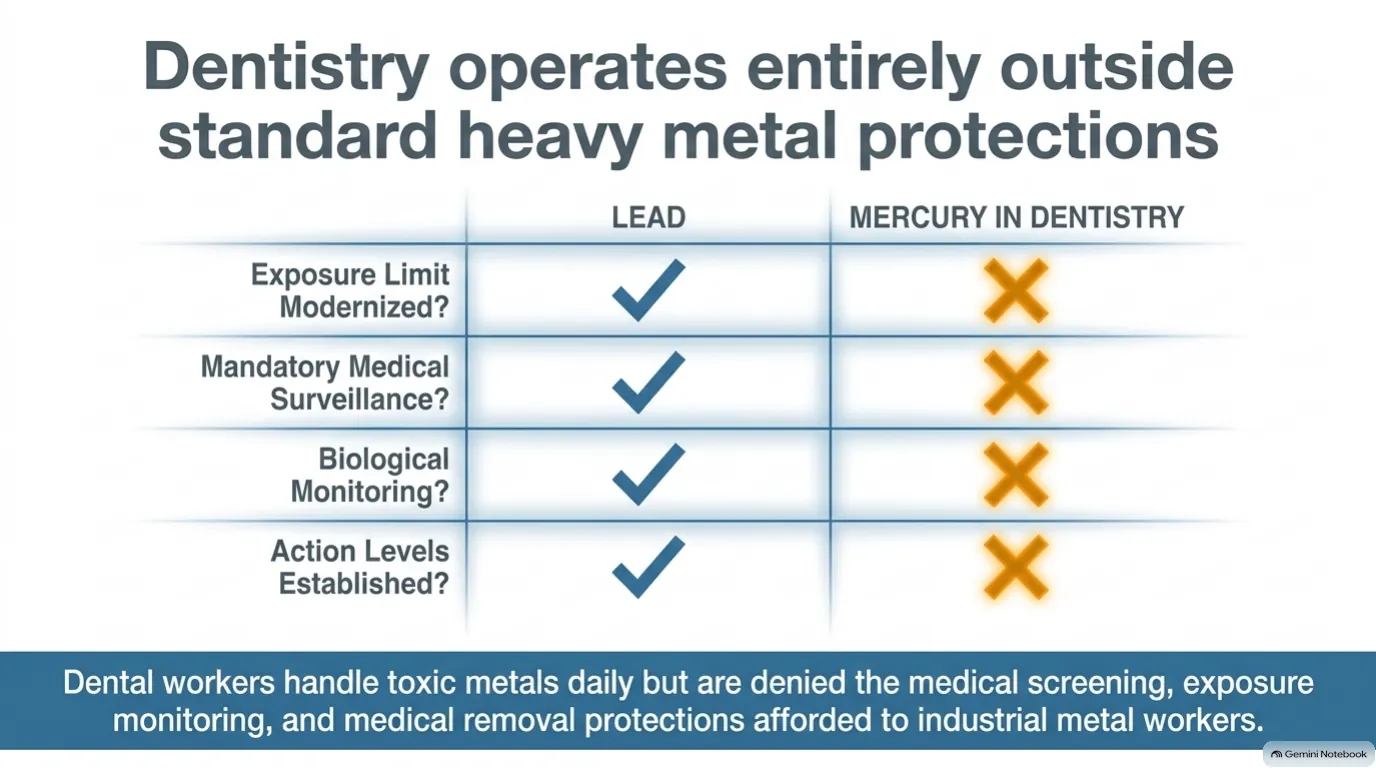
OSHA has long recognized that dental employers with one or more employees must comply with the OSH Act, including the air contaminants standard and the Hazard Communication standard (mercury is listed in Table Z-2 and therefore triggers HazCom). A 2012 interpretation letter confirmed this obligation and noted that scientific literature documents mercury exposure under normal working conditions [41]. Yet the absence of a substance-specific standard means there is no requirement for exposure monitoring, biological monitoring, medical surveillance focused on neurological or renal effects, or medical removal protection—provisions that exist for lead, cadmium, and other metals [42].
Structural Blind Spots That Hide Dental Mercury Risk
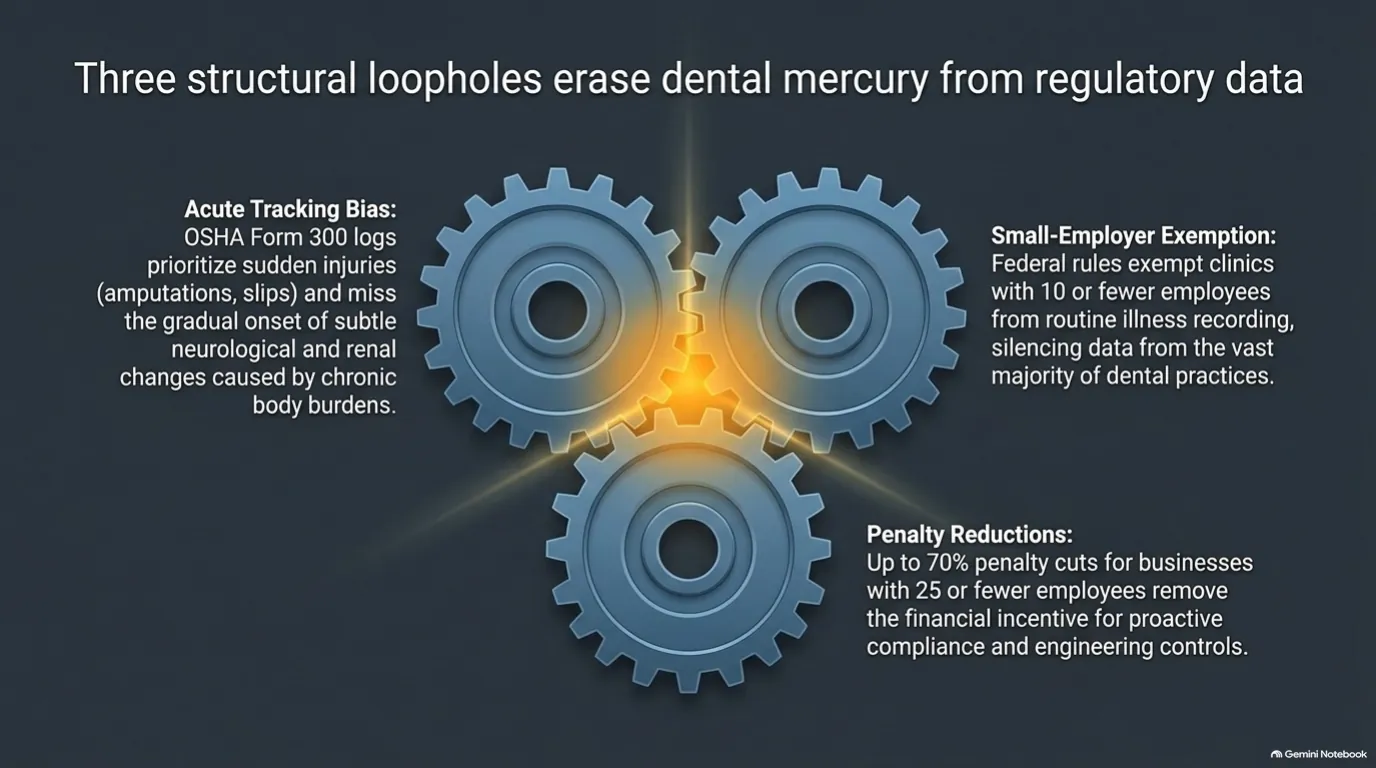
Several features of the OSHA system systematically reduce the visibility of mercury-related harm in dentistry:
- Injury and illness recordkeeping does not capture chronic illness well. OSHA’s Form 300 system is oriented toward acute injuries, days away from work, restricted duty, and certain diagnosed illnesses [43]. Mercury’s classic effects—subtle neurological changes, kidney effects, tremor, mood or cognitive changes—often develop gradually and may never appear on a 300 log even when they are occupationally related [44, 45, 46, 47, 48]. There is no mechanism that systematically links biological monitoring data (which is not required) to recordable cases.
- Small-employer recordkeeping exemption. Under 29 CFR 1904.1, companies that had 10 or fewer employees at all times during the previous calendar year are partially exempt from keeping the OSHA 300 Log, 301 forms, and 300A summary [49]. Most dental practices fall into this category. They must still report fatalities, inpatient hospitalizations, amputations, and eye losses, but routine recording of work-related illnesses is not required. This exemption removes a major source of data that OSHA and researchers would otherwise use to identify patterns in the occupation.
- Penalty reductions for small employers. As of July 2025 updates to OSHA’s Field Operations Manual, employers with up to 25 employees are eligible for a 70% penalty reduction on serious and other-than-serious violations (previously limited to 10 or fewer employees). Additional reductions are available for quick abatement and clean inspection history [50]. While these policies aim to support small businesses, they also lower the financial incentive for proactive compliance and reduce the deterrent effect of citations in precisely the sector where most dental mercury exposure occurs.
Combined with historically low inspection rates in dental offices, these features mean that mercury exposures and related health effects rarely surface in OSHA’s enforcement or data systems. The general duty clause remains available in principle, but it is rarely invoked for chronic chemical exposures when a PEL exists and no specific medical surveillance is mandated [51].
What an Updated Standard Should Include
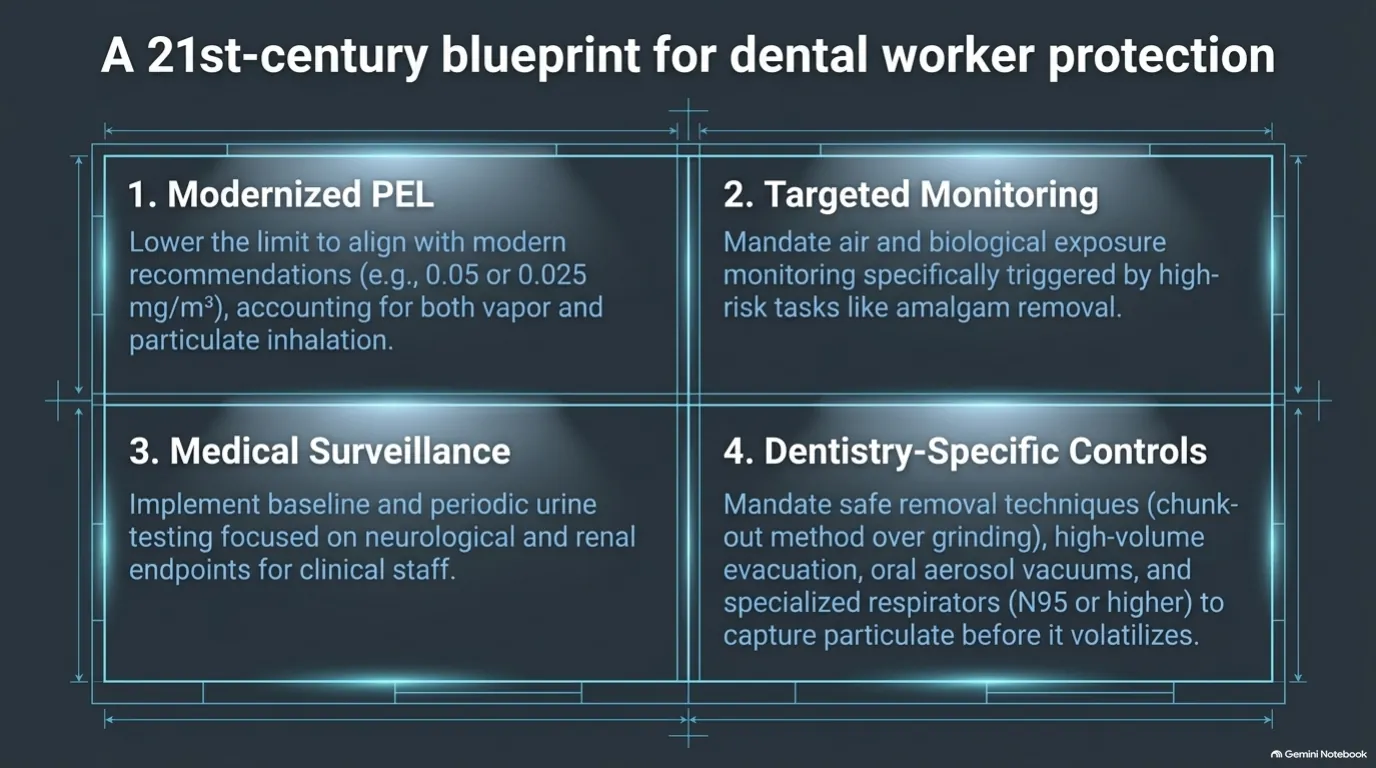
OSHA should acknowledge the documented occupational mercury exposures in dentistry and move beyond the 1971 air limit. A modernized approach would include:
- A lower PEL aligned with the ACGIH TLV of 25 µg/m³ (0.025 mg/m³), with appropriate consideration of dermal and particulate routes [52].
- Mandatory exposure monitoring (air and, where relevant, biological) triggered by tasks such as amalgam removal.
- Medical surveillance focused on neurological and renal endpoints for workers who perform or assist with amalgam-related procedures, including baseline and periodic urine mercury testing.
- Clear, dentistry-specific guidance on engineering controls, high-volume evacuation, water spray, oral aerosol vacuums, the chunk-out technique (sectioning amalgam into large pieces for removal rather than grinding it entirely), particulate capture, and appropriate respirator use (e.g., N95 or higher filtration for particulate protection, plus mercury-vapor-rated cartridges for vapor protection, during removal procedures). These measures align with the IAOMT’s Safe Mercury Amalgam Removal Technique (SMART) protocol, which was developed to minimize vapor and particulate exposure to dental personnel and patients [53].
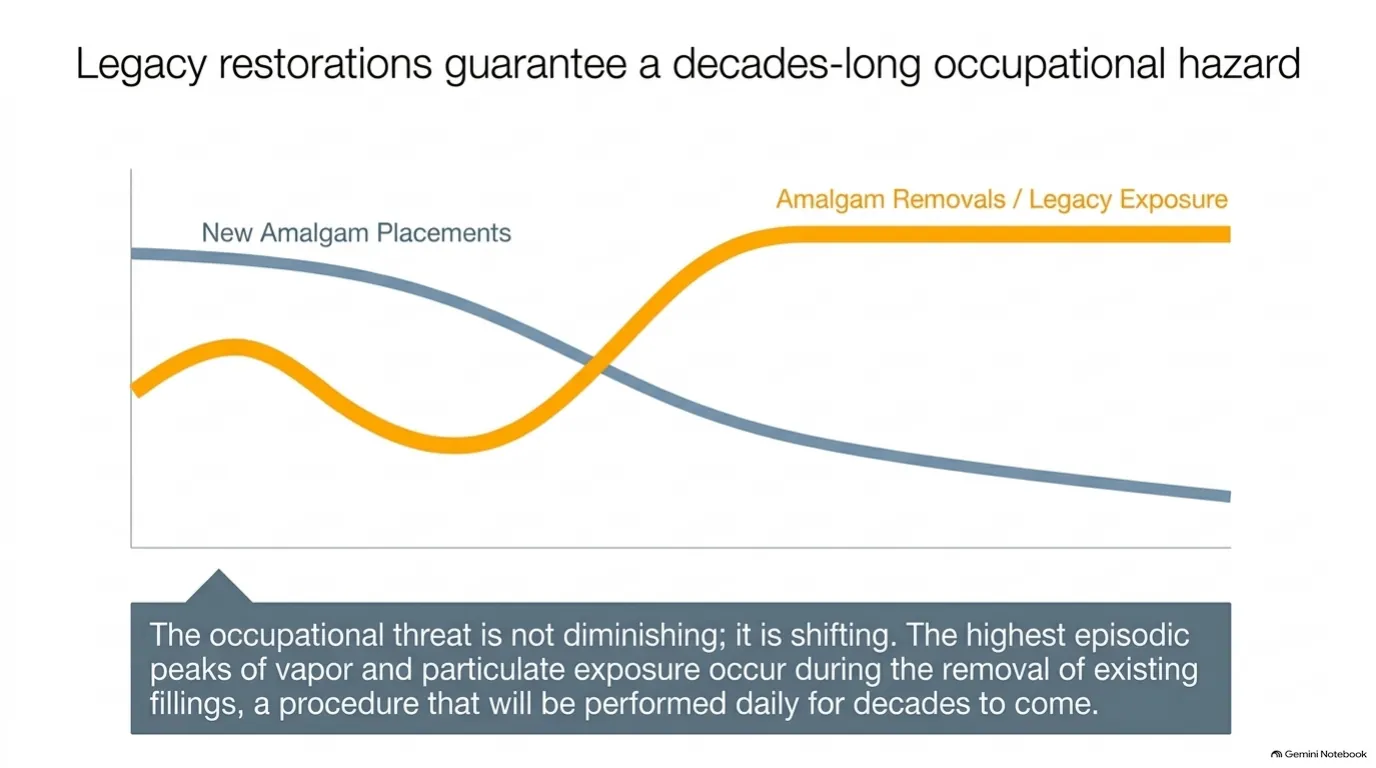
- Recognition that existing amalgam restorations will continue to be removed for many years, creating an ongoing exposure source even as new amalgam placement declines [1, 2, 54].
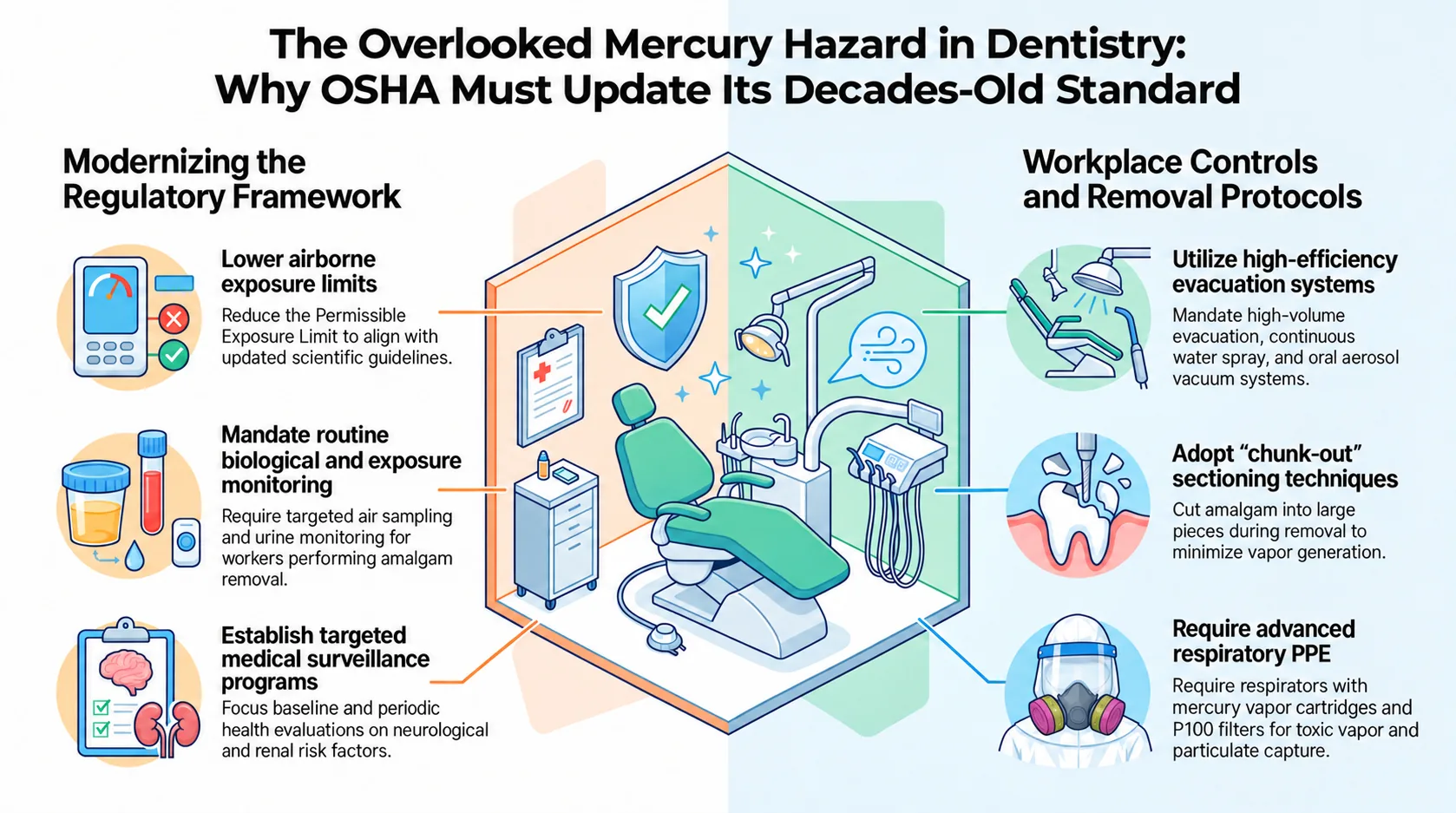
The 1978 recommended guidelines demonstrated that OSHA once understood the value of medical and biological monitoring for mercury. Nearly fifty years later, the largest remaining occupational users of elemental mercury still operate without those protections. Updating the standard is not only feasible; it is overdue. Dental workers deserve the same level of targeted protection that has long been afforded to workers exposed to other toxic metals.
Additional Supporting Evidence
References
1. U.S. Geological Survey. (2013). Changing patterns in the use, recycling, and material substitution of mercury in the United States (Scientific Investigations Report 2013–5137). https://pubs.usgs.gov/sir/2013/5137/ (Documents dental amalgam as the leading end-use sector for mercury consumption by 2010, accounting for 35–57% of use.)
2. U.S. Food and Drug Administration. Dental amalgam fillings. https://www.fda.gov/medical-devices/dental-devices/dental-amalgam-fillings
3. World Health Organization. (2021). Exposure to mercury: A major public health concern. https://www.who.int/publications/i/item/9789240023567
4. Kerr Corporation. (2014). Safety Data Sheet: Kerr Alloy™ (precapsulated dental amalgam), Version 1. https://www.dentalsafetysolutions.com/wp-content/uploads/2026/10/kerr-alloy-precapsulated-amalgam-sds-2014.pdf
5. Occupational Safety and Health Act of 1970, Pub. L. No. 91-596, 84 Stat. 1590 (1970). https://www.govinfo.gov/content/pkg/STATUTE-84/pdf/STATUTE-84-Pg1590.pdf
6. Occupational Safety and Health Administration. Mercury. https://www.osha.gov/mercury
7. Richardson, G. M. (2003). Inhalation of mercury-contaminated particulate matter by dentists: An overlooked occupational risk. Human and Ecological Risk Assessment, 9(6), 1519–1531. https://doi.org/10.1080/10807030390251010
8. Occupational Safety and Health Administration (OSHA). (1976, June 30). Allowable airborne concentrations of mercury [Interpretation letter]. https://www.osha.gov/laws-regs/standardinterpretations/1976-06-30
9. Occupational Safety and Health Administration (OSHA). (1996, September 3). PEL for inorganic mercury is a time weighted average, not a ceiling [Memorandum]. https://www.osha.gov/laws-regs/standardinterpretations/1996-09-03-0
10. National Institute for Occupational Safety and Health (NIOSH). (1973). Criteria for a recommended standard: Occupational exposure to inorganic mercury (DHEW (NIOSH) Publication No. 73-11024). U.S. Department of Health, Education, and Welfare. https://doi.org/10.26616/NIOSHPUB7311024
11. Occupational Safety and Health Administration (OSHA). (1978, October 30). Inorganic mercury and its compounds (CPL 2-2.6). https://www.osha.gov/enforcement/directives/cpl-02-02-006
12. Occupational Safety and Health Administration. 29 CFR 1910.1025. Lead. https://www.osha.gov/laws-regs/regulations/standardnumber/1910/1910.1025
13. AFL-CIO v. OSHA, 965 F.2d 962 (11th Cir. 1992). https://law.resource.org/pub/us/case/reporter/F2/965/965.F2d.962.89-7256.89-7274.89-7355.89-7430.89-7253.html
14. Occupational Safety and Health Administration. (1993, June 30). Air contaminants; final rule. 58 Fed. Reg. 35338. https://www.osha.gov/laws-regs/federalregister/1993-06-30-0
15. Chlorine Institute. Pamphlet 125: Medical surveillance and hygiene monitoring practices for control of worker exposure to mercury in the chlor-alkali industry. https://wedocs.unep.org/handle/20.500.11822/12988
16. World Health Organization. Mercury and health. https://www.who.int/news-room/fact-sheets/detail/mercury-and-health (States that exposure to mercury—even small amounts—may cause serious health problems; notes subclinical CNS effects at 20 µg/m³ in workers.)
17. World Health Organization. (2005). Mercury in health care: Policy paper (WHO/SDE/WSH/05.08). https://www.who.int/publications/i/item/WHO-SDE-WSH-05.08 (“Recent studies suggest that mercury may have no threshold below which some adverse effects do not occur.”)
18. Agency for Toxic Substances and Disease Registry (ATSDR). (2024). Toxicological profile for mercury. https://www.atsdr.cdc.gov/ToxProfiles/tp46.pdf (Chronic inhalation MRL of 0.3 µg/m³ for elemental mercury based on tremors.)
19. Clarkson, T. W., & Magos, L. (2006). The toxicology of mercury and its chemical compounds. Critical Reviews in Toxicology, 36(8), 609–662. https://doi.org/10.1080/10408440600845619 (Reviews low-level effects and lack of established safe threshold for neurological impacts.)
20. Mergler, D., Anderson, H. A., Chan, L. H. M., Mahaffey, K. R., Murray, M., Sakamoto, M., & Stern, A. H. (2007). Methylmercury exposure and health effects in humans: A worldwide concern. Ambio, 36(1), 3–11. https://pubmed.ncbi.nlm.nih.gov/17408186/ (Discusses low-level exposure effects and public health implications across mercury forms.)
21. Goodrich, J. M., Chou, H. N., Gruninger, S. E., Franzblau, A., & Basu, N. (2016). Exposures of dental professionals to elemental mercury and methylmercury. Journal of Exposure Science & Environmental Epidemiology, 26(1), 78–85. https://doi.org/10.1038/jes.2015.52
22. Åkesson, I., Schütz, A., Attewell, R., Skerfving, S., & Glantz, P. O. (1991). Status of mercury and selenium in dental personnel: Impact of amalgam work and own fillings. Archives of Environmental Health, 46(2), 102–109. https://doi.org/10.1080/00039896.1991.9937436
23. Herber, R. F., de Gee, A. J., & Wibowo, A. A. (1988). Exposure of dentists and assistants to mercury: Mercury levels in urine and hair related to conditions of practice. Community Dentistry and Oral Epidemiology, 16(3), 153–158. https://doi.org/10.1111/j.1600-0528.1988.tb00564.x
24. Engle, J. H., Ferracane, J. L., Wichmann, J., & Okabe, T. (1992). Quantitation of total mercury vapor released during dental procedures. Dental Materials, 8(3), 176–180. https://doi.org/10.1016/0109-5641(92)90078-q
25. Brune, D., Hensten-Pettersen, A., & Beltesbrekke, H. (1980). Exposure to mercury and silver during removal of amalgam restorations. Scandinavian Journal of Dental Research, 88(5), 460–463. https://doi.org/10.1111/j.1600-0722.1980.tb01254.x
26. Gioda, A., Hanke, G., Elias-Boneta, A., & Jiménez-Velez, B. (2007). A pilot study to determine mercury exposure through vapor and bound to PM10 in a dental school environment. Toxicology and Industrial Health, 23(2), 103–113. https://doi.org/10.1177/0748233707078219
27. NIOSH. NIOSH Pocket Guide to Chemical Hazards: Mercury compounds [except (organo) alkyls] (as Hg). https://www.cdc.gov/niosh/npg/npgd0383.html
28. Hursh, J. B., Clarkson, T. W., Miles, E. F., & Goldsmith, L. A. (1989). Percutaneous absorption of mercury vapor by man. Archives of Environmental Health, 44(2), 120–127. https://doi.org/10.1080/00039896.1989.9934385
29. Evidence of Harm. (2017). Amalgam dental fillings release toxic mercury vapors [Video]. YouTube. https://youtu.be/Sm4BL56yPoI
30. Dünninger, P., & Klaiber, B. (1991). Quecksilberdampfabgabe aus Amalgamkapseln während Trituration und Lagerung [Mercury vapor emission from amalgam capsules during trituration and storage]. Deutsche Zahnärztliche Zeitschrift, 46(9), 599–601. https://pubmed.ncbi.nlm.nih.gov/1817939/
31. Wirz, J., Iff, M., & Schmidli, F. (1993). Quecksilberdämpfe aus vordosierten Amalgamkapseln [Mercury vapors from premeasured amalgam capsules]. Schweizer Monatsschrift für Zahnmedizin, 103(8), 958–964. https://pubmed.ncbi.nlm.nih.gov/8367713/
32. Roberts, H. W., Leonard, D., & Osborne, J. (2001). Potential health and environmental issues of mercury-contaminated amalgamators. Journal of the American Dental Association, 132(1), 58–64. https://doi.org/10.14219/jada.archive.2001.0026
33. Ferracane, J., Adey, J., Wiltbank, K., Nakajima, H., & Okabe, T. (1999). Vaporization of Hg from Hg–In amalgams during setting and after abrasion. Dental Materials, 15(3), 191–195. https://doi.org/10.1016/s0109-5641(99)00033-0
34. Moxon, R., Xu, Z., Chris-Okoro, I., Cherono, S., & Kumar, D. (2023). Determination and calculations of mercury vapor concentration and energy released from freshly condensed dental amalgams having various copper percentages within the alloy. Materials, 16(9), 3452. https://pmc.ncbi.nlm.nih.gov/articles/PMC10180447/
35. Haley, B. E. (2007). A study on the release of mercury from dental amalgams made from different manufactured materials and produced by nine different dentists. IAOMT. https://iaomt.org/hg-emission-amalgam-measured/
36. Cartland, R. F., Jr. (2012). The US Dental Amalgam Debate, 2010 Meeting of the FDA Dental Products Panel. IAOMT. https://iaomt.org/wp-content/uploads/Cartland-US-Dental-Amalgam-Debate-2010-FDA-Meeting-2012-11-18.pdf
37. Warwick, R., O’Connor, A., & Lamey, B. (2013). Mercury vapour exposure during dental student training in amalgam removal. Journal of Occupational Medicine and Toxicology, 8, 27. https://doi.org/10.1186/1745-6673-8-27
38. Warwick, D., Young, M., Palmer, J., & Ermel, R. W. (2019). Mercury vapor volatilization from particulate generated from dental amalgam removal with a high-speed dental drill – a significant source of exposure. Journal of Occupational Medicine and Toxicology, 14, 22. https://doi.org/10.1186/s12995-019-0240-2
39. Picard, G., Prakash, T., Labrèche, F., & Gravel, S. (2025). Occupational exposures to chemicals in dentistry: A scoping review. Journal of Occupational and Environmental Hygiene, 22(12), 970–986. https://doi.org/10.1080/15459624.2025.2540834
40. Nimmo, A., Werley, M. S., Martin, J. S., & Tansy, M. F. (1990). Particulate inhalation during the removal of amalgam restorations. Journal of Prosthetic Dentistry, 63(2), 228–233. https://doi.org/10.1016/0022-3913(90)90110-X
41. Occupational Safety and Health Administration (OSHA). (2012, January 9). Dental office employers with one or more employees must comply with the OSH Act [Interpretation letter]. https://www.osha.gov/laws-regs/standardinterpretations/2012-01-09-0
42. Occupational Safety and Health Administration. Medical screening and surveillance requirements in OSHA standards. https://www.osha.gov/medical-surveillance/guide
43. Occupational Safety and Health Administration. 29 CFR Part 1904. Recording and reporting occupational injuries and illnesses. https://www.osha.gov/laws-regs/regulations/standardnumber/1904
44. Echeverria, D., Woods, J. S., Heyer, N. J., Rohlman, D. S., Farin, F. M., Bittner, A. C., Jr., Li, T., & Garabedian, C. (2005). Chronic low-level mercury exposure, BDNF polymorphism, and associations with cognitive and motor function. Neurotoxicology and Teratology, 27(6), 781–796. https://doi.org/10.1016/j.ntt.2005.08.001
45. Ritchie, K. A., Gilmour, W. H., Macdonald, E. B., Burke, F. J. T., McGowan, D. A., Dale, I. M., Hammersley, R., Hamilton, R. M., Binnie, V., & Collington, D. (2002). Health and neuropsychological functioning of dentists exposed to mercury. Occupational and Environmental Medicine, 59(5), 287–293. https://doi.org/10.1136/oem.59.5.287
46. Langworth, S., Elinder, C. G., Sundquist, K. G., & Vesterberg, O. (1992). Renal and immunological effects of occupational exposure to inorganic mercury. British Journal of Industrial Medicine, 49(6), 394–401. https://doi.org/10.1136/oem.49.6.394
47. Mortada, W. L., Sobh, M. A., El-Defrawy, M. M., & Farahat, S. E. (2002). Mercury in dental restoration: Is there a risk of nephrotoxicity? Journal of Nephrology, 15(2), 171–176. https://pubmed.ncbi.nlm.nih.gov/12018634/
48. Rowland, A. S., Baird, D. D., Weinberg, C. R., Shore, D. L., Shy, C. M., & Wilcox, A. J. (1994). The effect of occupational exposure to mercury vapour on the fertility of female dental assistants. Occupational and Environmental Medicine, 51(1), 28–34. https://doi.org/10.1136/oem.51.1.28
49. Occupational Safety and Health Administration (OSHA). 29 CFR 1904.1. Partial exemption for employers with 10 or fewer employees. https://www.osha.gov/laws-regs/regulations/standardnumber/1904/1904.1
50. U.S. Department of Labor. (2025, July 14). US Department of Labor updates penalty guidelines to support small businesses and eliminate workplace hazards [Press release]. https://www.dol.gov/newsroom/releases/osha/osha20250714
51. Occupational Safety and Health Act of 1970, § 5(a)(1), 29 U.S.C. § 654(a)(1). https://www.govinfo.gov/content/pkg/USCODE-2023-title29/html/USCODE-2023-title29-chap15-sec654.htm
52. American Conference of Governmental Industrial Hygienists (ACGIH). Threshold Limit Values for Chemical Substances. https://www.acgih.org/mercury-all-forms-except-alkyl/
53. International Academy of Oral Medicine and Toxicology (IAOMT). Safe Mercury Amalgam Removal Technique (SMART). https://iaomt.org/resources/safe-removal-amalgam-fillings/
54. Estrich, C. G., Lipman, R. D., & Araujo, M. W. B. (2021). Dental amalgam restorations in nationally representative sample of US population aged ≥15 years: NHANES 2011–2016. Journal of Public Health Dentistry, 81(4), 327–330. https://doi.org/10.1111/jphd.12456