Dentistry’s Persistent Failure to Protect Employees from Mercury Exposures Violates OSHA Standards.
For far too long, the dental profession has ignored OSHA standards when it comes to protecting dental employees from mercury exposures. Published studies have shown amalgam fillings to release mercury during routine dental procedures—putting dentists, assistants, hygienists, and dental staff at unnecessary risk every single day.
One of our goals at Dental Safety Solutions is to expose the ongoing failure of the dental profession to protect workers from mercury exposure, shine a light on these regulatory violations, and drive meaningful change in dental safety standards by presenting easy to implement solutions. Protecting the health of the entire dental team from workplace hazards is not optional, it’s a legal, ethical, and medical imperative.
Why OSHA Was Established and Its Core Mandate
OSHA was created by the Occupational Safety and Health Act of 1970, in response to alarmingly high rates of workplace injuries, illnesses, and fatalities in the 1960s. Its core mandate is “to assure safe and healthful working conditions for working men and women” by setting and enforcing standards, providing training, outreach, education, and assistance, while encouraging employers and employees to reduce occupational hazards.
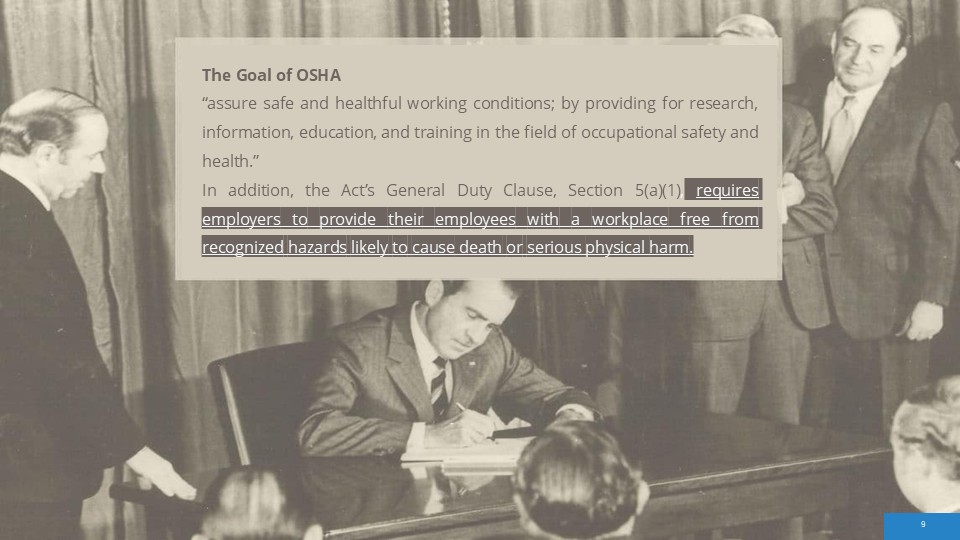
The Act’s General Duty Clause, Section 5(a)(1), requires employers to provide their employees with a workplace free from recognized hazards likely to cause death or serious physical harm.
The Dental Profession’s Mercury Problem
Decades of published scientific studies show that dental amalgam, which contains approximately 50% elemental mercury, releases mercury during mixing, placement, polishing, removal. Mercury continues to be released after amalgam removal from used dental equipment, airborne particles settling onto surfaces and from amalgam waste, such as contaminated PPE found in the trash, and chairside traps.
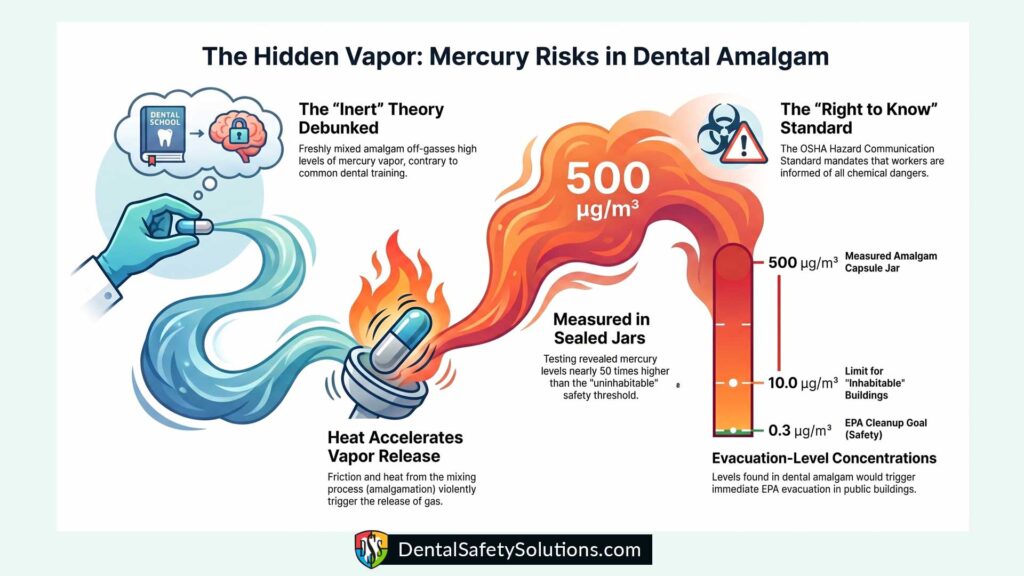
This exposes dental workers to a known neurotoxin linked to respiratory, neurological, reproductive and systemic health effects. Despite clear OSHA standards to inform and protect employees from hazards, the dental profession has failed to integrate OSHA’s requirement of protections into routine practice, often relying on outdated assumptions that amalgam safely “binds” mercury.
The Hazard Communication Standard
OSHA’s Hazard Communication Standard (HazComm, 29 CFR 1910.1200), commonly known as the “Right to Know” law, guarantees every employee the right to information about the hazardous chemicals they work with, including mercury in dental amalgam. The updated standard further emphasizes the “Right to Understand,” requiring that labels, Safety Data Sheets, and training be clear, accessible, and presented in a language and format that workers can readily comprehend and apply to protect themselves.
Under HazComm, dental employers must treat mercury-containing amalgam as a hazardous chemical. This requires maintaining current Safety Data Sheets (SDSs) for all amalgam products, and developing a written hazard communication program among a host of other requirements.
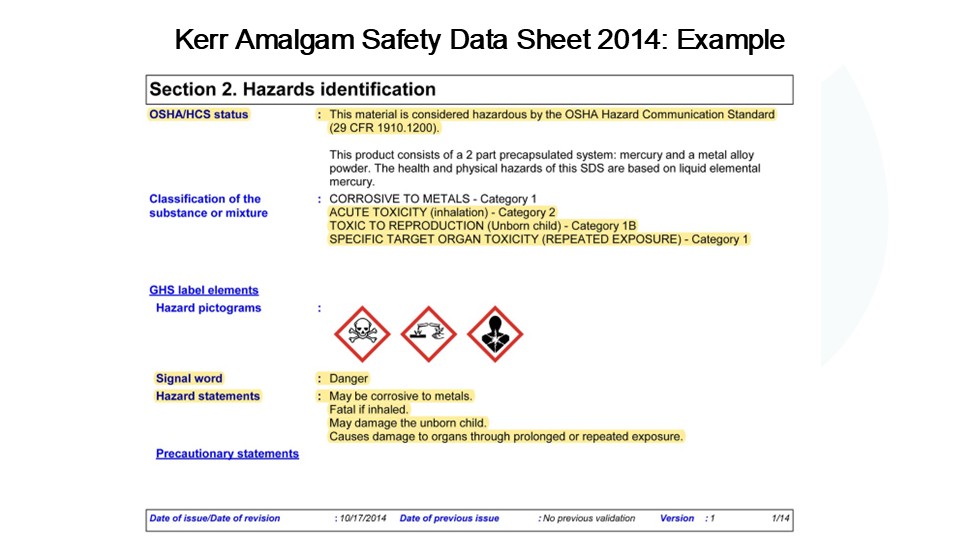
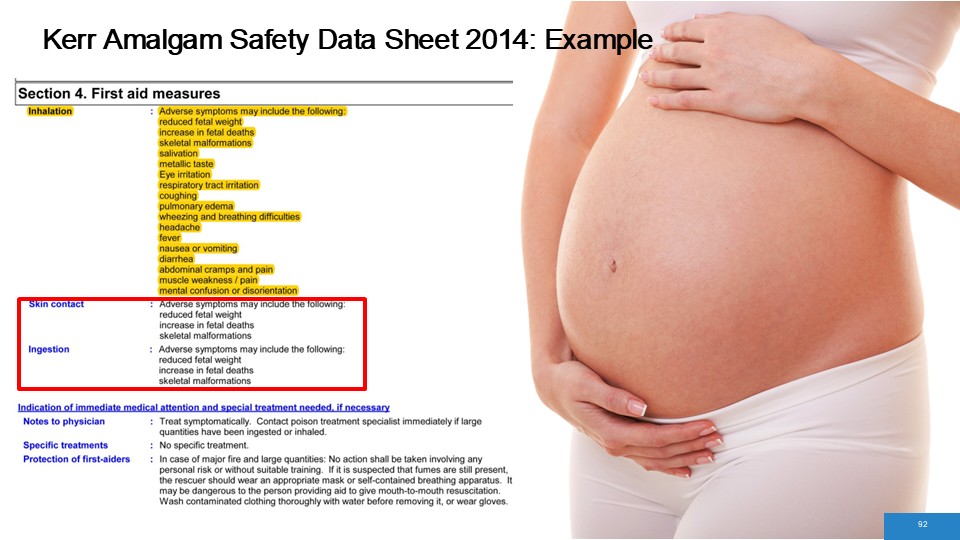
Employers must also provide documented training to all staff on the health hazards of mercury exposures (including neurotoxicity and reproductive effects), safe handling procedures, spill response, and the use of engineering controls and PPE. Many dental practices fall short by treating amalgam as a benign material rather than a regulated hazardous substance, resulting in incomplete and insufficient employee training — all clear violations of the standard’s “right-to-know” and “right-to-understand” requirements.
Hazard Assessment Requirements: Dentist Ignore Hazards
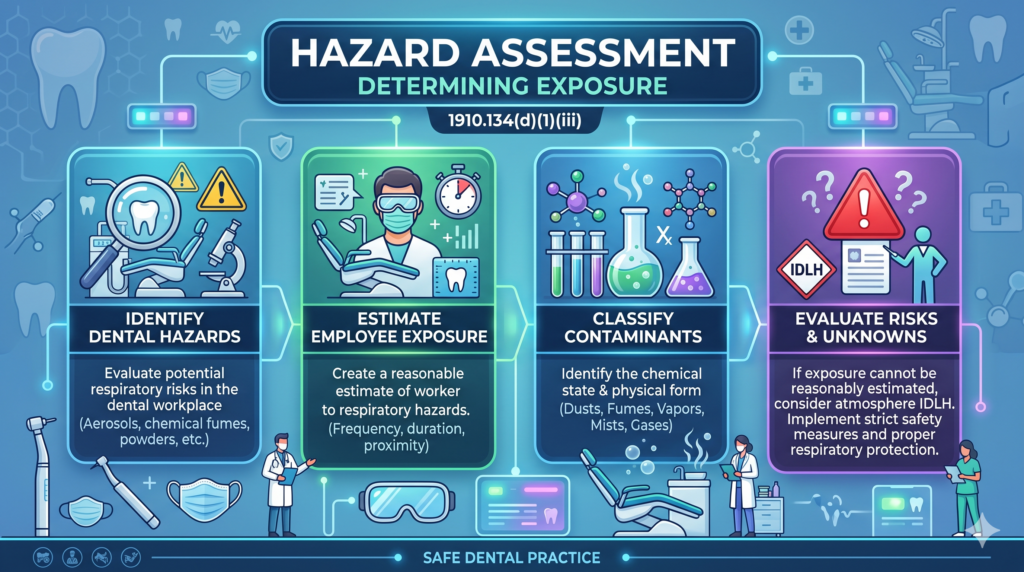
Under 1910.132(d) (Personal Protective Equipment), employers must assess the workplace to determine if hazards necessitate PPE, select appropriate equipment, and certify the assessment in writing.
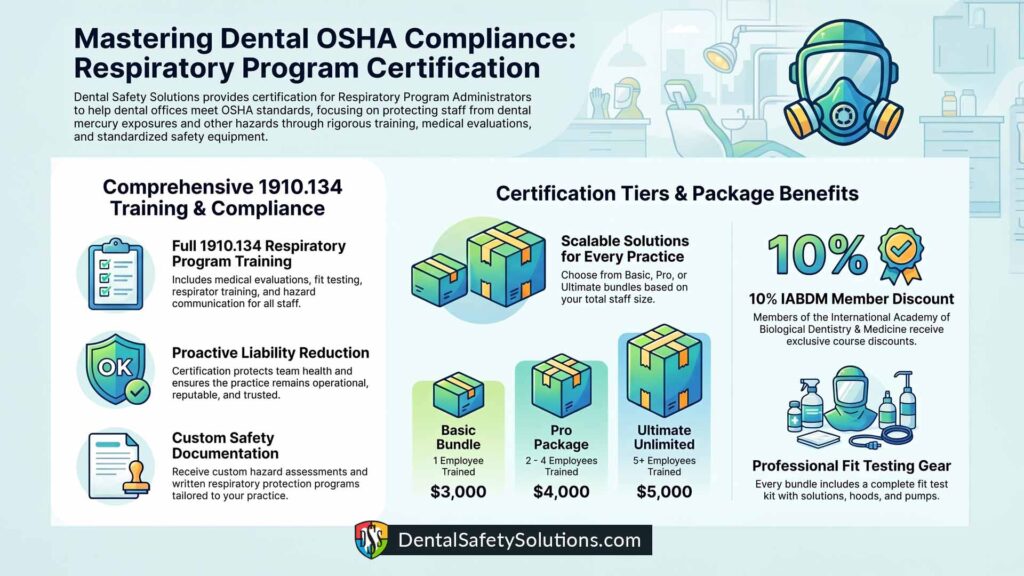
When respirators are required—as they frequently are when mercury exposure exceeds Permissible Exposure Limits (PELs)—1910.134 mandates a full respiratory protection program. This includes medical evaluations, respirator fit testing, respirator training on use and maintenance, and a written program administered by a qualified Respiratory Program Administrator.
Outdated and Inadequate PELs
Permissible exposure limits (PEL) are legally enforceable, regulatory limits set by OSHA to protect workers from hazardous chemical, physical, or airborne substances. They define the maximum concentration of a contaminant, usually averaged over an 8-hour workday, to which a worker can safely be exposed
The OSHA PEL for mercury vapor was adopted in 1971 from earlier consensus standards and has never been updated for general industry and is widely recognized as outdated and insufficient.
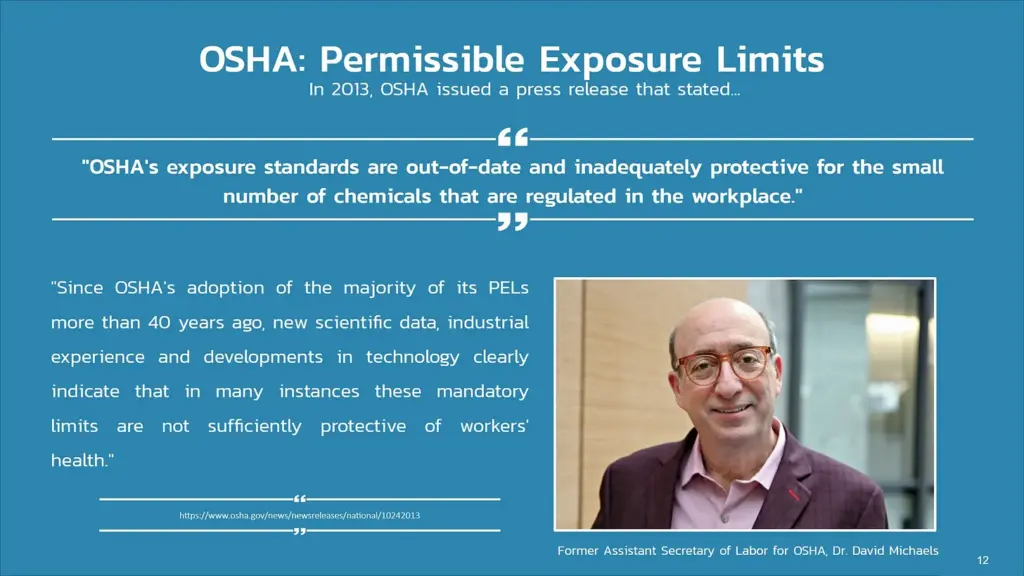
OSHA itself has repeatedly stated that its PELs, are “out of date and inadequately protective.” Many are based on 1960s science; studies show dental procedures routinely generate peak exposures that approach and exceed even the outdated OSHA limit.
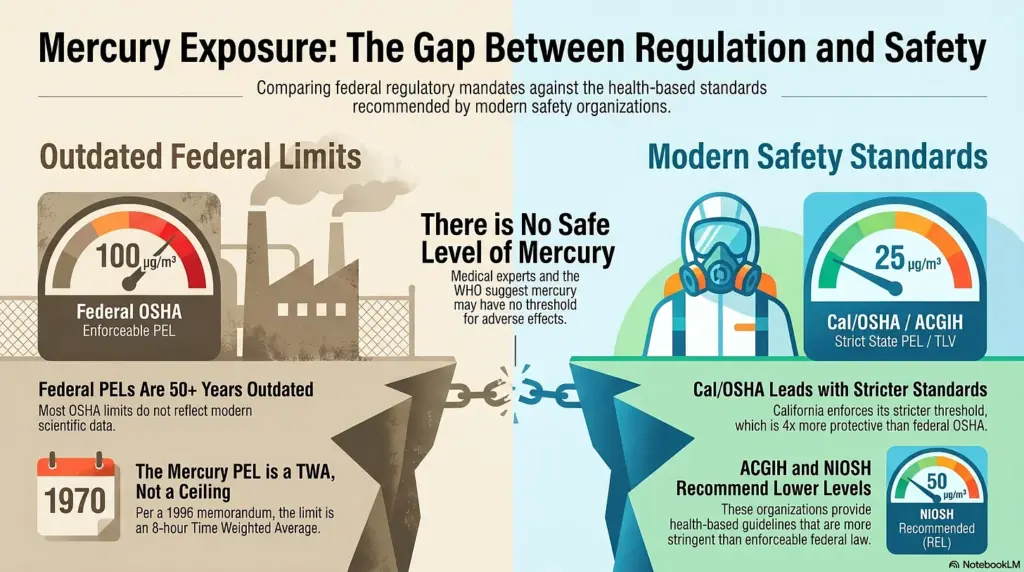
Meanwhile, the World Health Organization has emphasized that mercury is a highly toxic substance with no known safe level of exposure, particularly for vulnerable populations, due to its cumulative neurotoxic, developmental, and systemic effects.
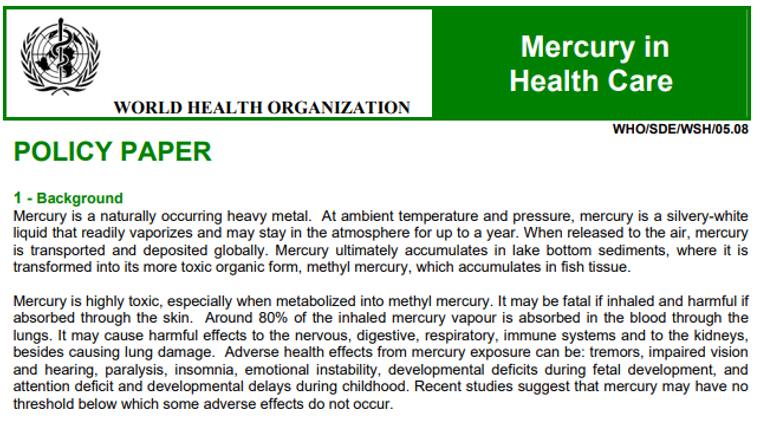
This stark contrast highlights how reliance on decades-old regulatory limits leaves dental workers exposed to risks that current scientific consensus deems unacceptable.
Widespread Non-Compliance in Dentistry
In short, OSHA has long provided a clear, strict, and fully enforceable standards to protect dental workers from hazardous mercury exposures — yet the dental profession has persistently and stubbornly refused to implement these sensible OSHA safety standards.
Hazard communication, workplace hazard assessments, effective engineering controls, ppe, respirators, and proper training are not suggestions—they are mandatory legal requirements. By continuing to overlook these safeguards, far too many dental practices are placing their employees at unnecessary risk and remain in violation of federal law.
From Trust and Misinformation to Overwhelming Reality
Many dentists entered this profession with genuine care and trust in the systems that trained them, only to realize—often years later—that they were never properly educated about the real risks of chronic mercury exposure from dental amalgams.
Instead, they were actively reassured by major dental organizations that these materials were safe and that standard office practices were sufficient.
When the truth finally surfaces, the sudden awareness of patient and staff harm can feel crushing, especially when paired with the overwhelming prospect of overhauling your practice to implement proper engineering controls, patient and staff safety protocols during amalgam removal, training staff, and achieving full OSHA compliance under the mercury-specific standards that have existed for decades.
Currently Available Solutions
The IABDM PROTECT Protocol offers a clear, evidence-based roadmap for the safe removal of amalgam fillings, dramatically reducing mercury exposure for both dental patients and dental employees.
Paired with Dental Safety Solutions’ specialized Respiratory Program Administrator training tailored for dental mercury, dentists now have straightforward, turnkey tools to meet OSHA requirements confidently—without having to reinvent the wheel or face the transition alone.